
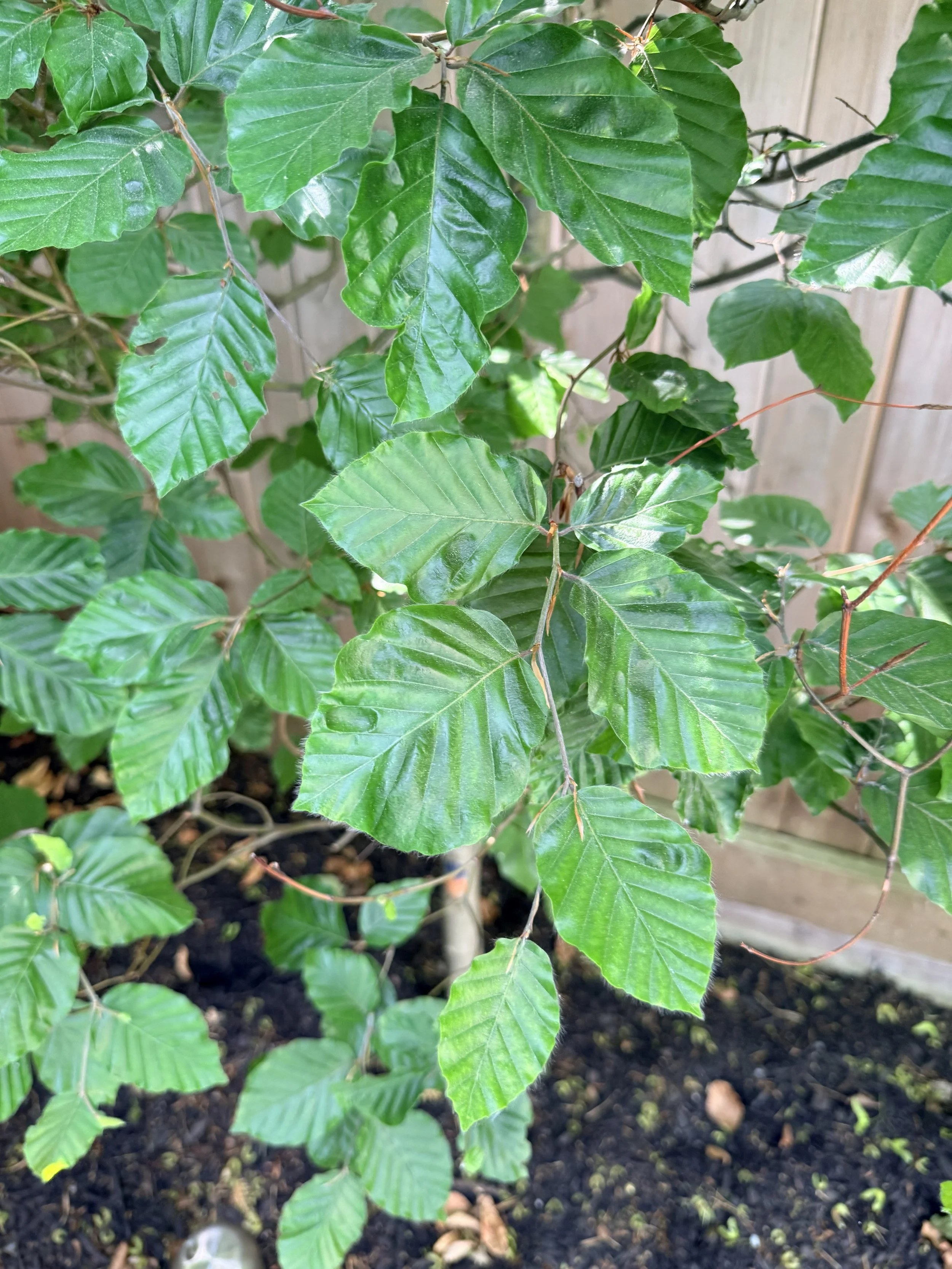
Beech Leaf Disease Is Here
Fall is just around the corner, which means an important treatment window is approaching for homeowners with beech trees. Over the past five years, the GTA has seen the spread of Beech Leaf Disease, a serious tree disease caused by a microscopic nematode that can lead to significant leaf damage, canopy decline, and, in severe cases, tree mortality. The disease is becoming increasingly common across the region, with our own crews beginning to spot signs in local landscapes last year. Fortunately, treatment is available, and acting during the right window can help protect the health and longevity of affected beech trees.
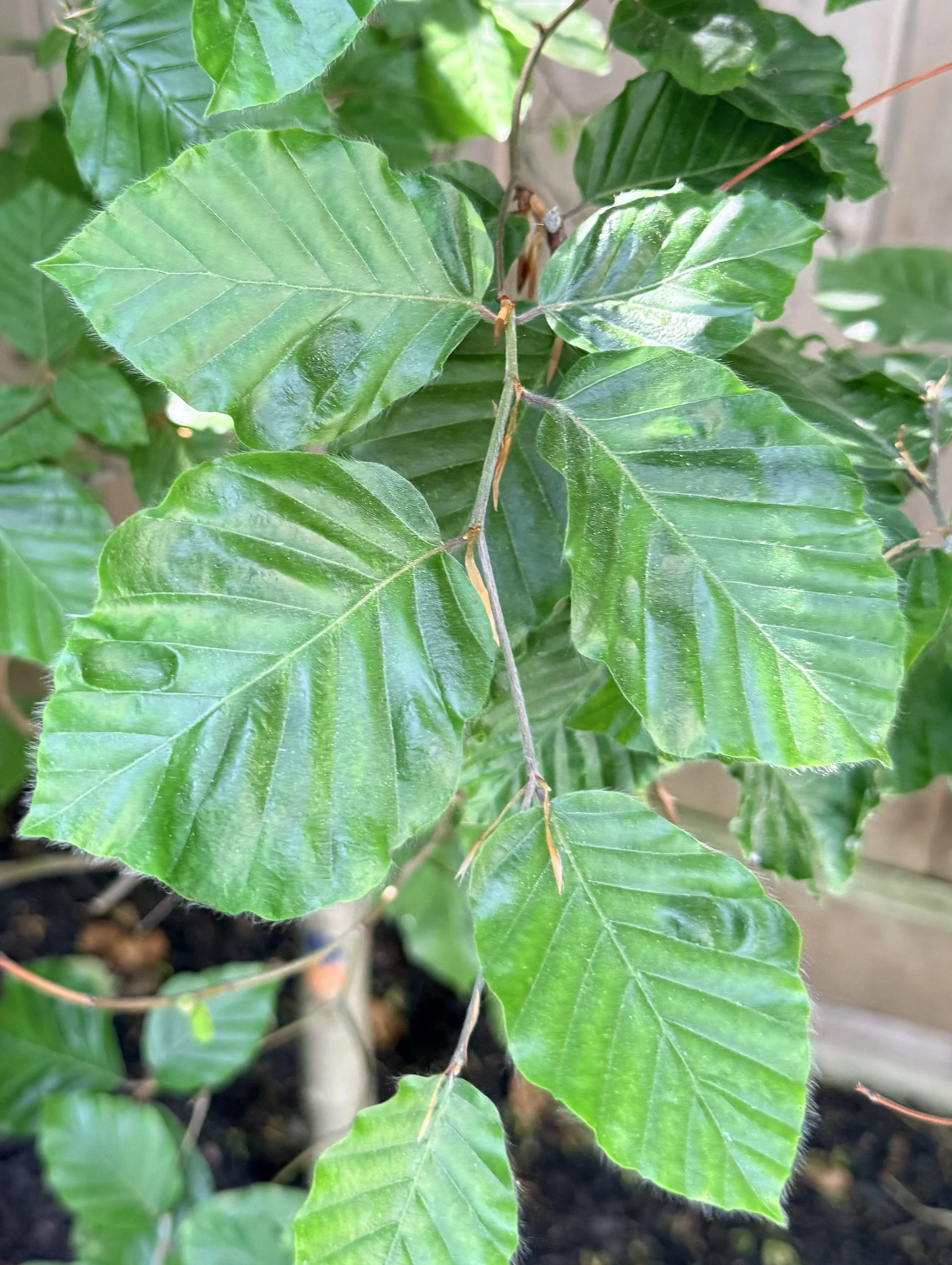
Example of very early signs of discoloration from Beech leaf Disease found at clients home.
Why the Next Two Weeks Matter
Because Beech Leaf Disease is still a relatively new disease in our region, there is currently no officially established treatment protocol specifically recommended for it. Based on the guidance and experience of trusted specialists we work with in the field, our team has seen promising results using a phosphorus-based fertilizer treatment. Applied to the root system, the treatment provides the tree with a targeted boost of nutrients that supports the development of next year's buds, where the nematodes will overwinter. The goal is to strengthen the tree from the ground up, helping it produce healthier buds and leaves the following season while improving its natural resilience to the disease.
For trees already showing signs of Beech Leaf Disease, this additional support can be especially valuable. A stronger root system and healthier developing buds give the tree a better chance of pushing through the winter, maintaining healthy growth, and building greater resistance to the effects of the disease over time. While results can vary depending on the health and severity of the affected tree, we've seen encouraging results from this approach in the landscapes we manage.
The final treatment window for this year closes at the end of the first week of September. Missing this window means waiting until next year's treatment period, leaving affected trees without this additional support as they enter winter and potentially allowing the disease to cause further stress and damage. If you have beech trees on your property, now is the time to have them inspected and determine whether treatment is appropriate.
How to Spot Beech Leaf Disease & Next Steps
The best way to determine whether your beech tree may be affected by Beech Leaf Disease is to inspect the leaves closely. Early symptoms can be subtle, so knowing what to look for can help you identify the disease before more significant damage occurs.
Early Signs
Dark green or blackish bands: Dark green to blackish areas may begin to appear between the veins of the leaves, creating a banded or mottled appearance.
Thickened leaves: Affected portions of the leaf may become noticeably thicker as the tree responds to the disease.
Deformed or curled leaves: As symptoms progress, leaves may become distorted, curl inward, or develop an uneven appearance.
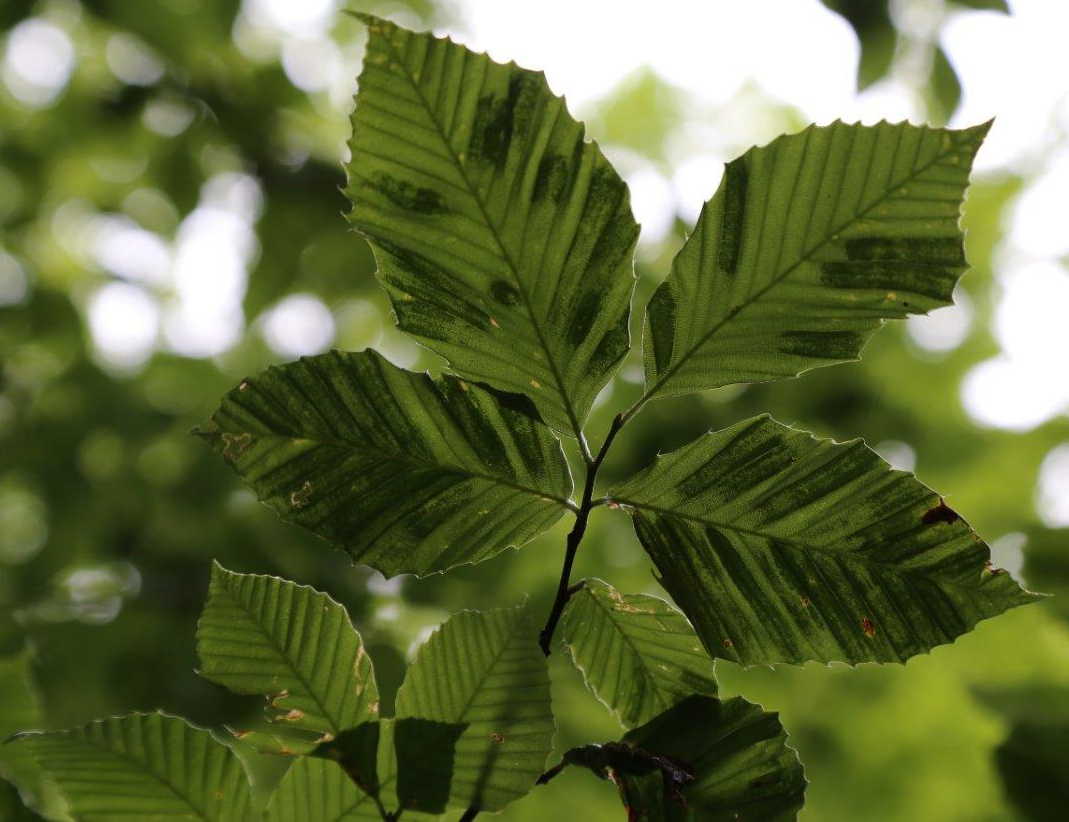
Example of early stage darkening colour of leaves.
Late-Stage Symptoms
Yellowing and leaf death: The discolored areas of the leaves may eventually turn yellow or brown and begin to die.
Thinning canopy: As affected leaves deteriorate and fall prematurely, the tree can develop a noticeably thin or sickly appearance, particularly throughout the upper canopy.
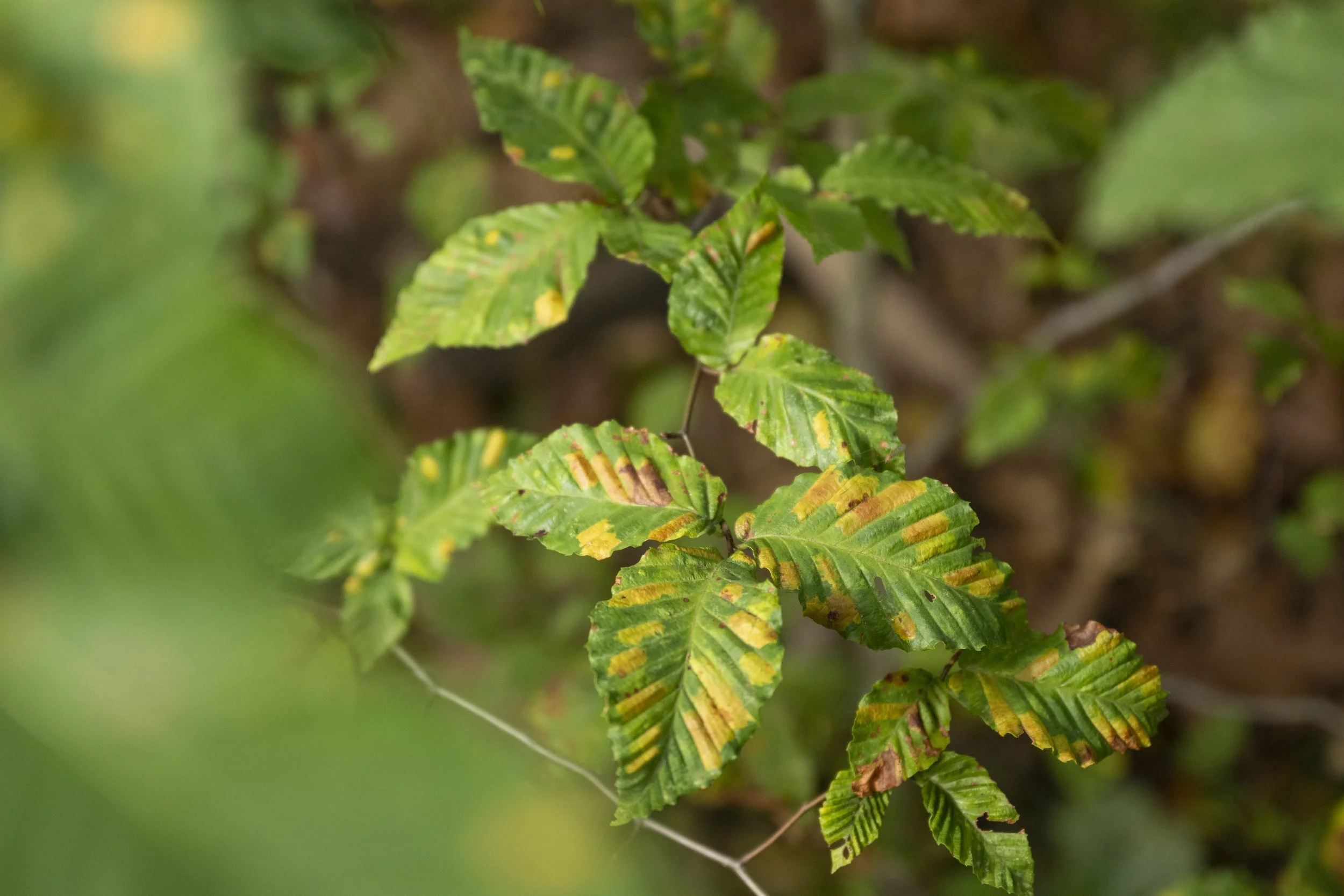
Example of late stage damage from Beech Leaf Disease.
The earlier Beech Leaf Disease is identified, the more opportunity there is to support the tree's natural defenses and improve its ability to withstand the disease. If you suspect that your beech tree may be affected, or simply want confirmation from a specialist, we recommend connecting with a certified and trusted tree care professional for an assessment.
If you're in the Toronto area, you can also reach out to the Parkscape team. We can arrange for one of our specialists to assess your tree, help determine whether the symptoms are consistent with Beech Leaf Disease, and recommend the appropriate next steps before this year's treatment window closes.