
Why This Project Stayed With Us
From the first phone call to award ceremonies, the journey from a design package to a completed landscape is one we experience many times throughout the year. The true reward, however, often comes in the quieter moments between loading trucks, visiting job sites, or heading into another meeting. It is in these pauses that the designers and construction team at Parkscape find themselves gathered around our wall of awards or the slideshow of project photos displayed throughout the office, reflecting on the spaces we have helped bring to life.
Each image represents months of collaboration, craftsmanship, and problem solving. Together, they form a visual timeline of daily efforts compounded into something lasting, meaningful, and beautiful.
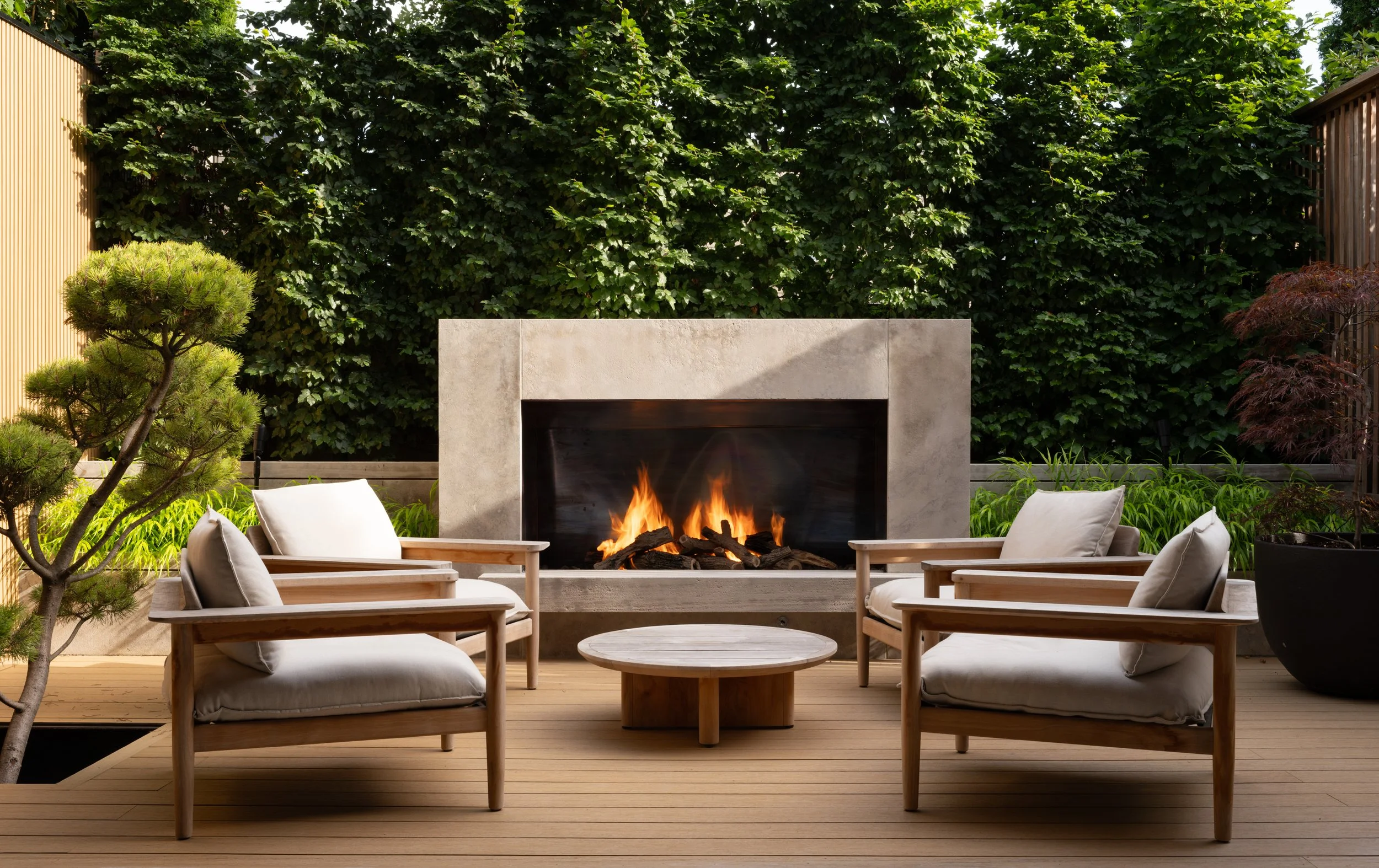
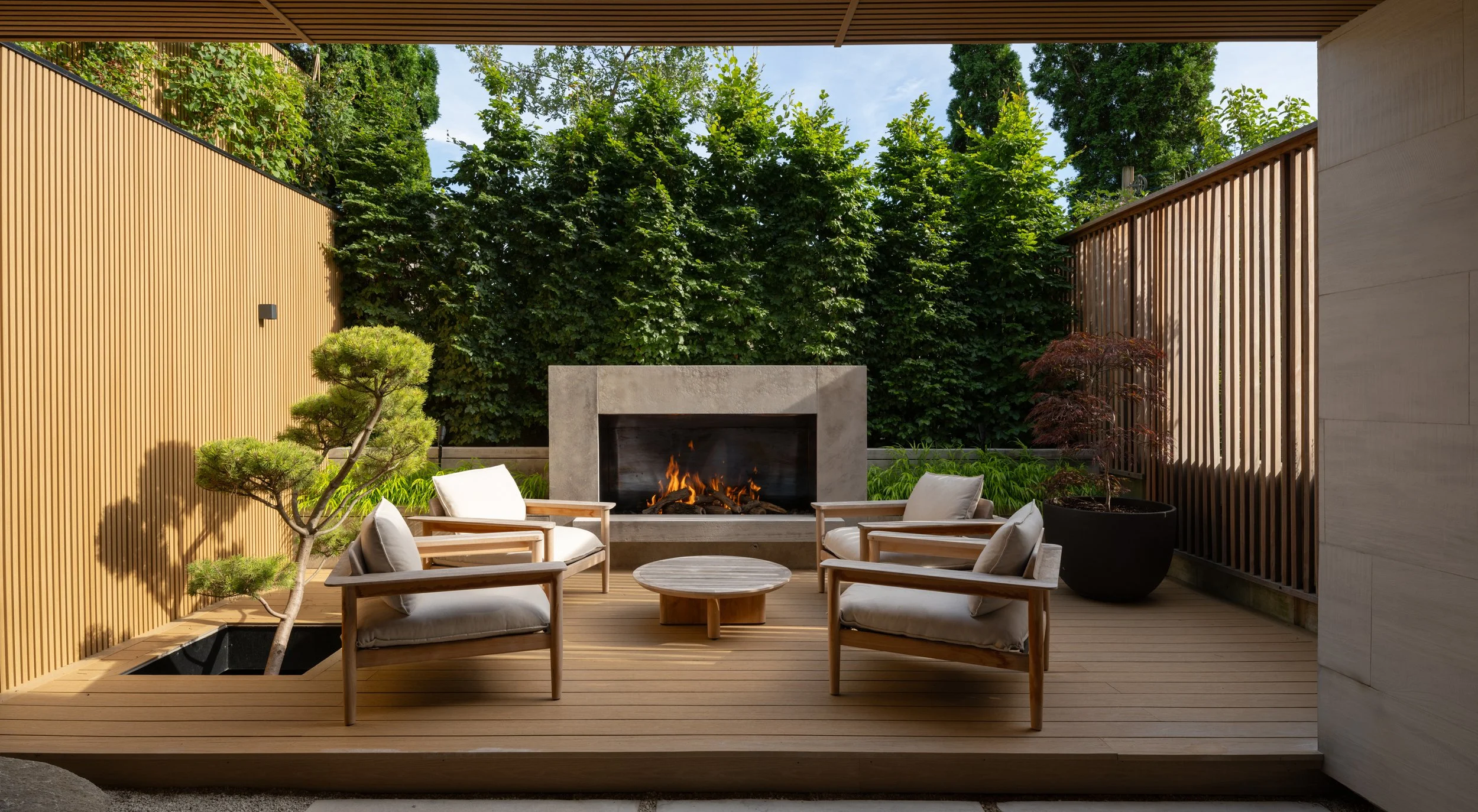
One project in particular has continued to capture our attention since its completion in 2025. In an era defined by contemporary minimalism, it is refreshing to encounter a landscape that pays homage to the architectural influences of the 1930s while thoughtfully embracing the design sensibilities of today. Tucked away in the heart of Midtown Toronto, this secluded backyard retreat invites visitors into a warm and refined blend of Mid-Century and Japandi design.
This is Withrow Serenity, and here is what we love about it.
The Opportunity Beneath the Challenges
Creating a beautiful landscape is rewarding. Transforming a space that has fallen into disrepair and become largely unusable brings an entirely different sense of accomplishment.
Before Withrow Serenity became one of our favourite projects, the property faced a number of significant challenges. Poor drainage from a second floor balcony directed water into the backyard, damaging hardscape materials and creating conditions that prevented healthy plant growth. Prolonged sun exposure further stressed the site, while a neighbouring birch tree contributed a constant accumulation of debris and staining throughout the space.
Beyond these practical concerns, the landscape felt disconnected from the home itself. The backyard was cold, unfinished, and lacked the warmth and refinement found within the completed interior. Rather than serving as a natural extension of the residence, it existed as a separate and underutilized space, falling short of the lifestyle and experience the homeowners envisioned.
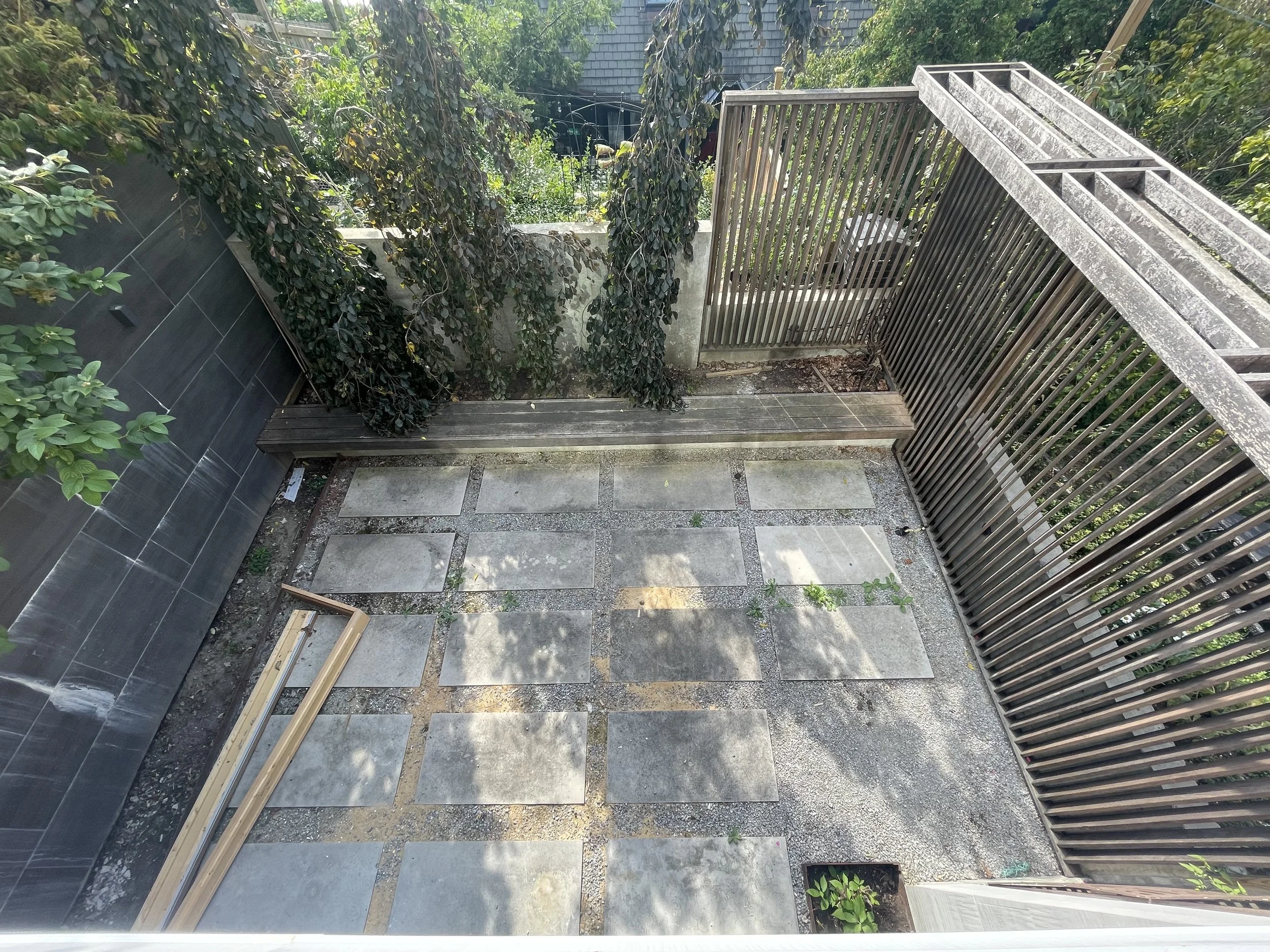
Before construction: Initial Intake
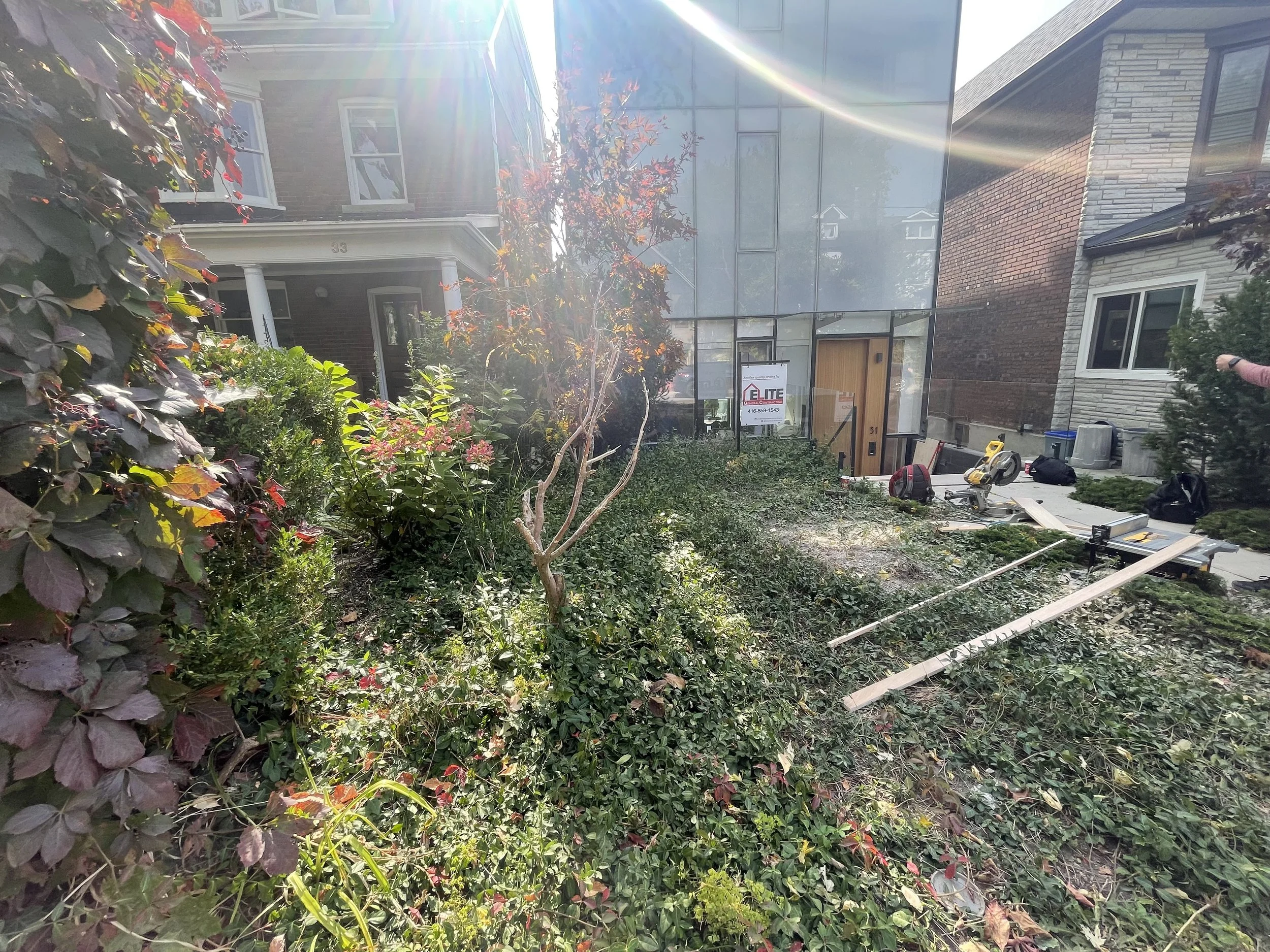
The front landscape told a similar story. While the newly constructed home presented a striking architectural presence, the surrounding landscape had yet to rise to the same standard. An unruly lawn stretched across the frontage, offering little structure or connection to the home's clean lines and expansive glass façade.
Yet even here, the site's potential was evident. A solitary Japanese maple stood within the front garden, serving as a natural focal point and hinting at what the landscape could become. With the right framing and planting composition, the front yard had the opportunity to complement the architecture rather than simply surround it, creating a more cohesive arrival experience for both homeowners and guests.
Recognizing the Potential
Despite its condition, the site possessed the qualities of an exceptional design opportunity. In the hands of the right designer, its potential was impossible to ignore.
For Tina McMullen of Bosque Landscape Architecture, the existing landscape offered more than a list of challenges. It revealed a framework upon which something remarkable could be built. Having collaborated with Tina on numerous projects over the years, our team at Parkscape knew her ability to uncover opportunity within a space was second to none.
The site's naturally defined proportions, existing wood screens, and mature beech trees at the rear of the property hinted at a design direction waiting to emerge. What others may have seen as limitations became the foundation for a landscape that would soon bring warmth, balance, and purpose back to the property.
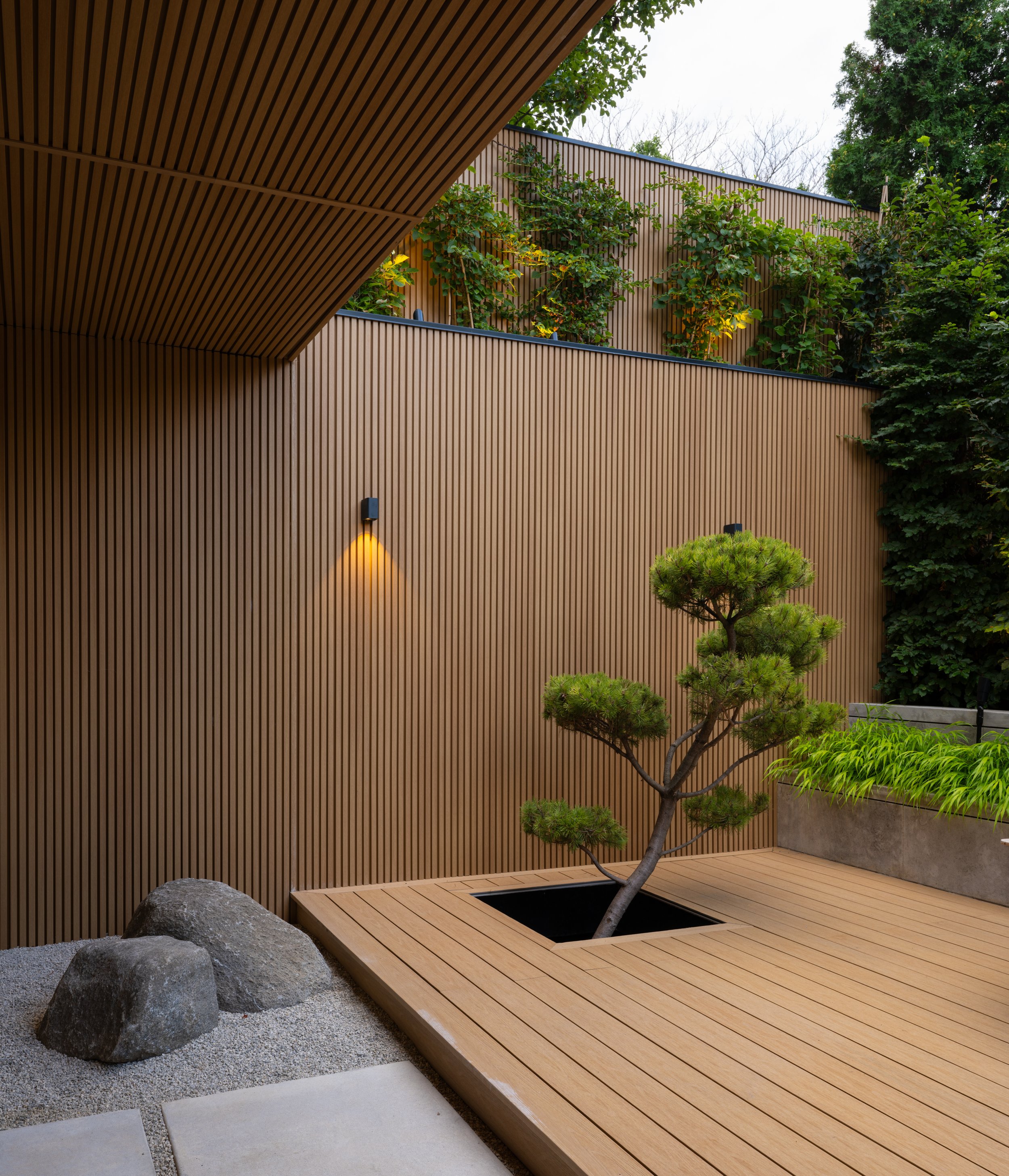
The most successful landscapes begin with a clear understanding of the people who will live within them. Every design decision, material selection, and spatial arrangement should ultimately support the lifestyle of the client.
In this case, that foundation was already present. The newly completed interior reflected a thoughtful blend of Mid-Century and Japandi influences, mirroring the homeowner's calm and considered personality. Rather than introducing a competing design language, the landscape needed to feel like a natural continuation of the home itself.
One request from the client stood above all others: the space needed to feel zen.
He envisioned a private retreat from the pace of city life, a garden that offered moments of quiet reflection and restoration. At the same time, the landscape needed to accommodate intimate gatherings with close friends, balancing solitude and hospitality within a relatively compact footprint.
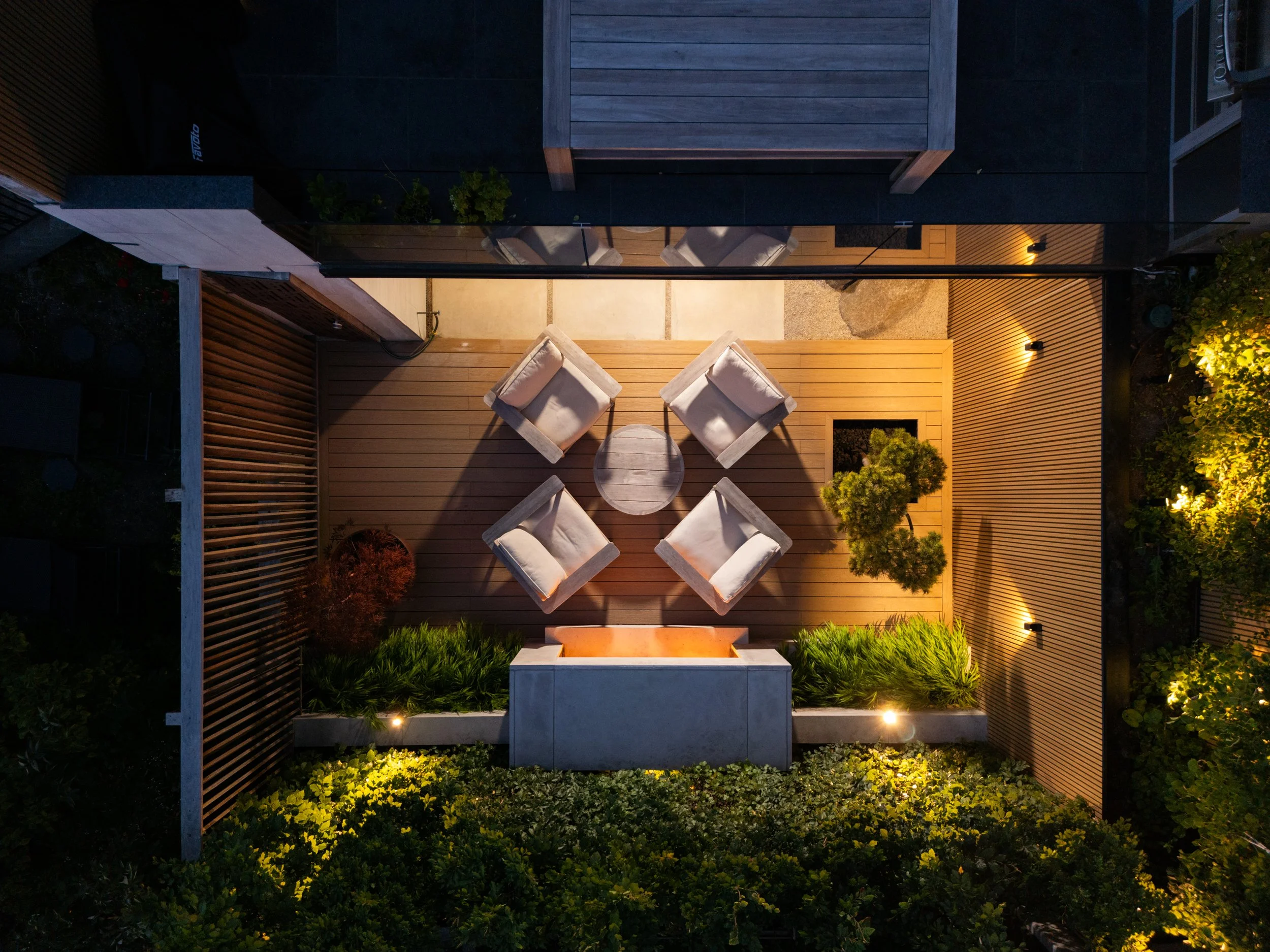
The design brief quickly became clear. The landscape needed to be low maintenance, complement the architecture and interior design of the home, maximize the functionality of a modest urban property, and above all, cultivate a sense of calm.
A key architectural preference further shaped the design direction. The client was drawn to long, uninterrupted lines and a strong sense of visual continuity. Existing elements within the site, including the linear paneling and evenly spaced paving, reinforced this approach and inspired the introduction of fluted wall cladding and elongated deck boards throughout the space.
Particular attention was paid to minimizing visual interruptions. The decking layout was carefully planned to reduce seams and cuts wherever possible, allowing the eye to travel naturally across the landscape. This emphasis on rhythm and continuity became one of the defining characteristics of the project.
To achieve both the desired aesthetic and the performance requirements of the site, NewTechWood composite decking and fluted cladding were selected. The material offered the durability needed to withstand the property's drainage and sun exposure challenges while providing the clean lines and extended board lengths necessary to realize the design vision.
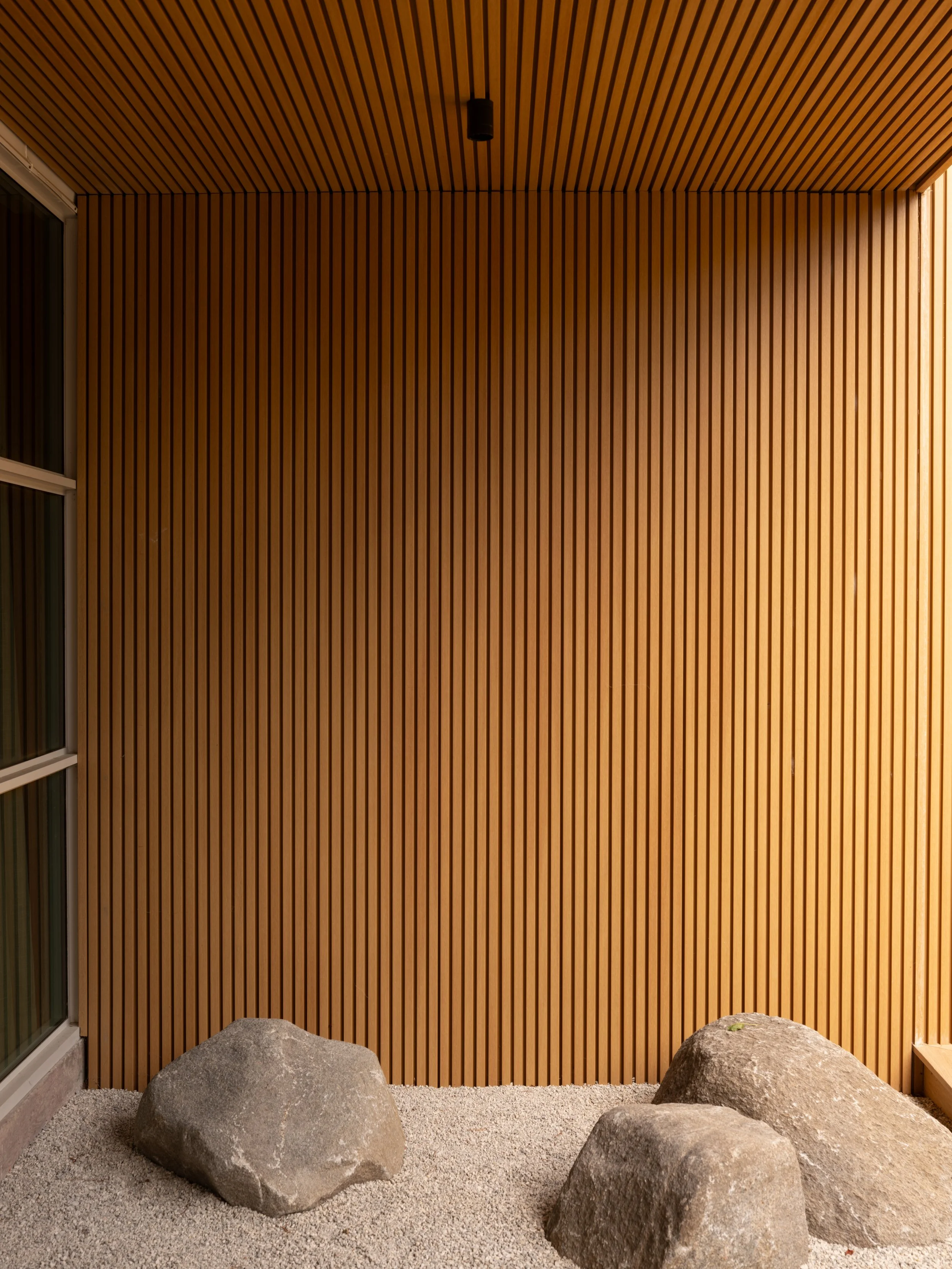
To further reinforce the sense of calm and contemplation that guided the project, the entrance to the deck was designed as a deliberate moment of transition.
Drawing inspiration from the existing gravel and stone pathway, the space was reimagined to echo the restrained beauty of a Japanese stone garden. Traditionally intended to encourage reflection and mindfulness, these landscapes offered a natural reference point for the atmosphere the client hoped to achieve.
The entrance was reconstructed using a carefully selected fine gravel base, chosen for its clean appearance and subtle texture. Large hand selected boulders were then thoughtfully positioned throughout the space, creating a composition that feels balanced, intentional, and grounded.
The result is an arrival sequence that gently slows the pace of movement through the garden. Before stepping onto the deck, visitors are invited to pause, take in their surroundings, and experience the sense of tranquility that defines the landscape as a whole.
A Bonsai Takes Flight
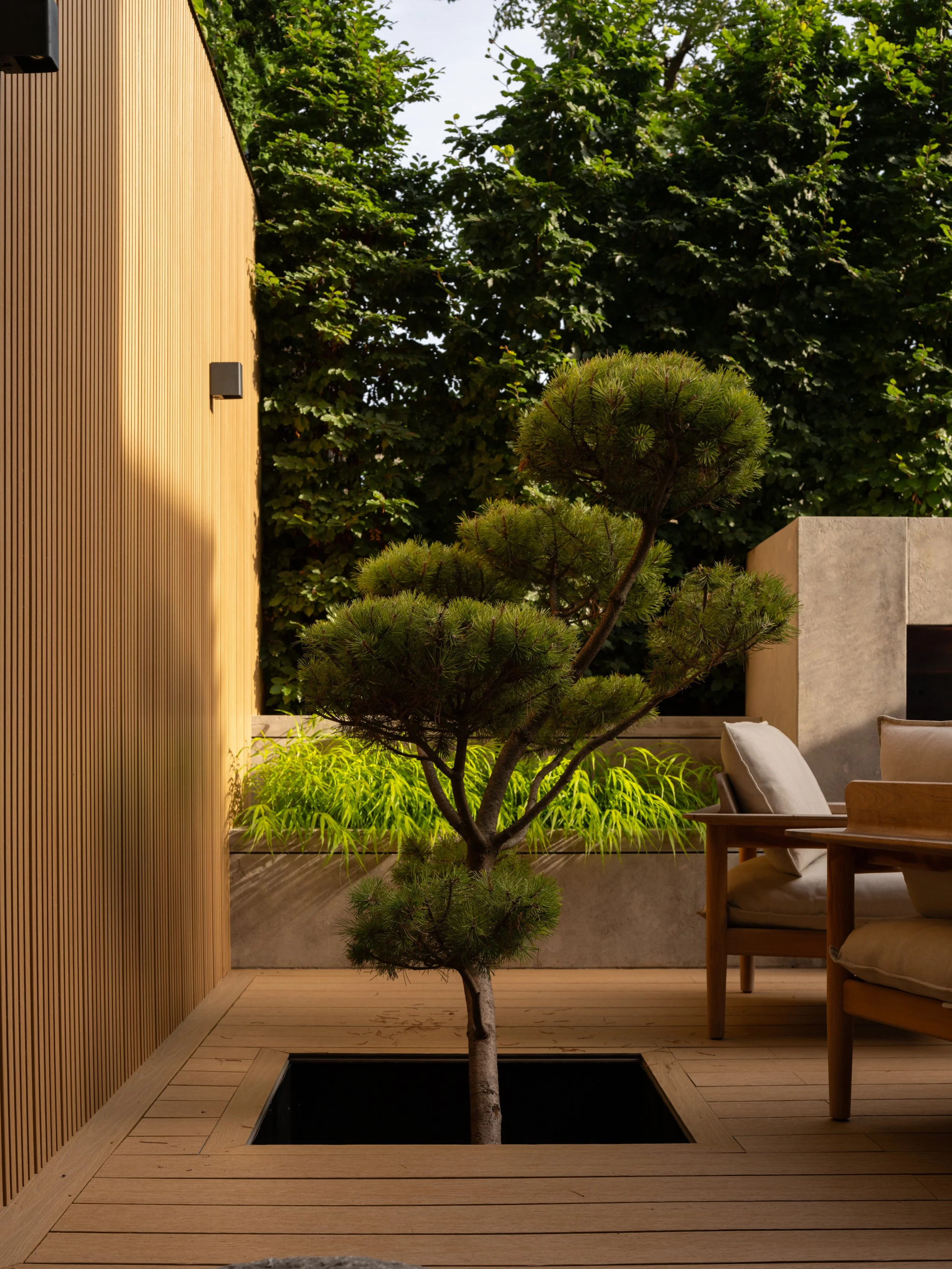
Landscape construction often presents its share of memorable moments, but few are quite as striking as watching a specimen tree suspended above a client's home.
As a focal point of the design, a sculpted Pinus mugo 'Wintergold' was positioned within a custom cutout in the deck, creating the appearance of an oversized bonsai emerging from the landscape. The tree's distinctive form provided an immediate sense of maturity and character, anchoring the space while reinforcing the project's Japanese-inspired influences.
Introducing a specimen of this size, however, came with its own challenges. Limited access on both sides of the property made traditional installation methods impossible, requiring the team to find a creative solution.
While cranes are regularly used to transport materials into difficult-to-access backyards, this project marked the first time our team had used one to carefully fly a specimen tree of this scale over a residence. The operation demanded precise coordination between the crane operator, installation crew, and landscape team, ensuring the tree arrived safely in its final position without compromising either the property or the specimen itself.
The result was well worth the effort. Today, the tree serves as one of the defining features of the landscape, drawing the eye across the deck and providing a living focal point that will continue to develop character with each passing season.
To tackle both the previous drainage issues of the existing site, and maintain the longevity of both the deck and the Pinus tree, we worked with BlueGreen Urban and utilized their soil cell infrastructure underneath the deck.
We also craned eight beech trees, that were planted along the rear of the property to create a natural green screen, providing privacy from neighbouring yards while establishing a seamless backdrop for the garden. As they mature, they will further enhance the sense of enclosure and draw greater attention to the landscape's primary focal point.
Where the Details Matter Most
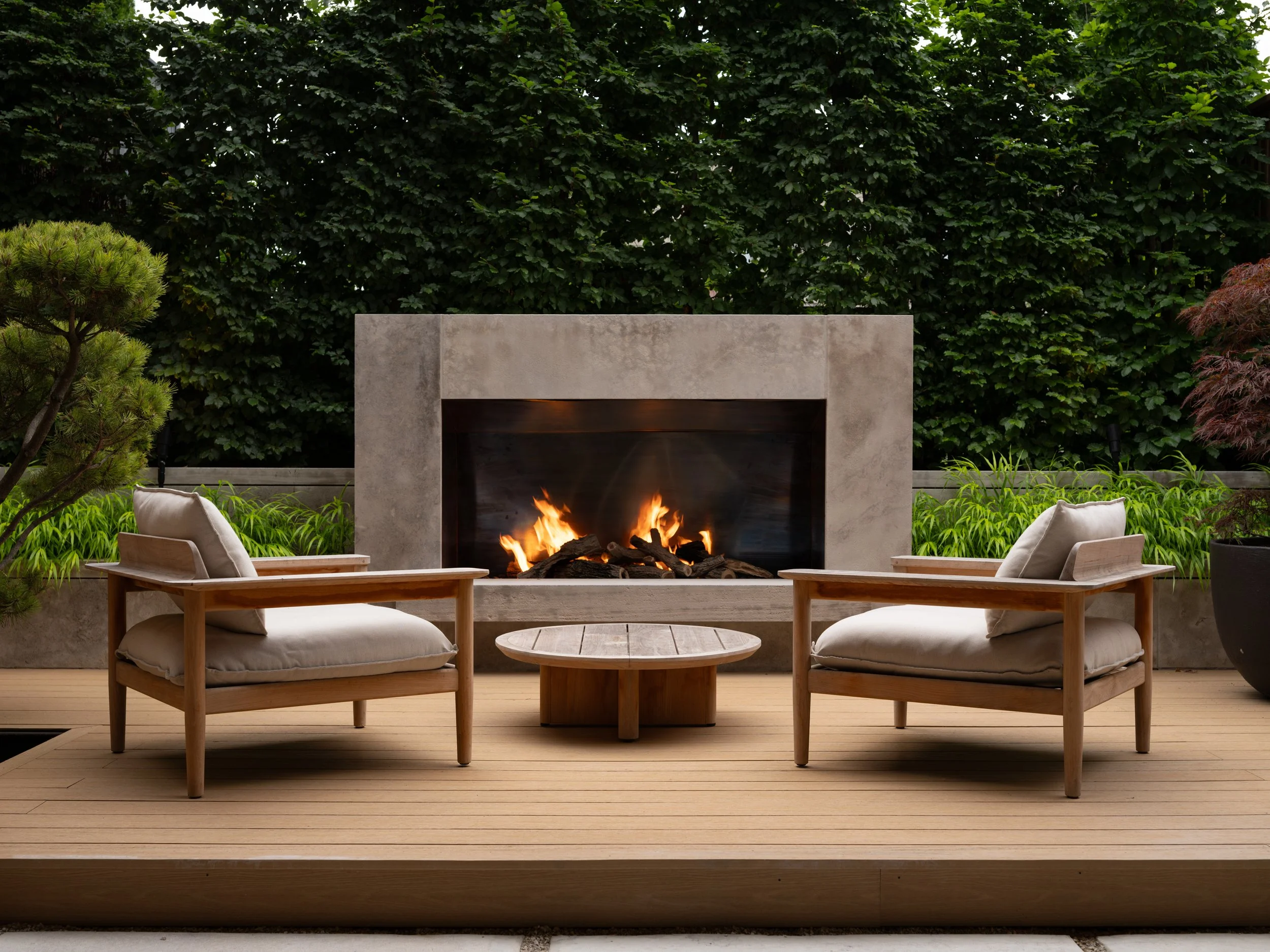
One of our favourite details within the project is the natural stone fireplace and its relationship to the tiered stone planting beds that frame it. Simple in concept yet highly refined in execution, the feature serves as a focal point while seamlessly connecting several elements throughout the landscape. Algonquin limestone was selected for both its natural character and timeless elegance, allowing the feature to blend effortlessly into the surrounding landscape while complementing the home's refined material palette.
Working closely with Tina and the design team, every detail was carefully considered to ensure the installation felt integrated rather than imposed. Among our favourite moments is the precise alignment of the stone planter within the groove of the adjacent fluted wall, creating a subtle connection between materials and forms. Equally satisfying is the way the uplighting directed toward the beech trees helps soften and conceal the natural stone seams, reinforcing the continuous visual flow the client envisioned from the beginning.
Framing the Home
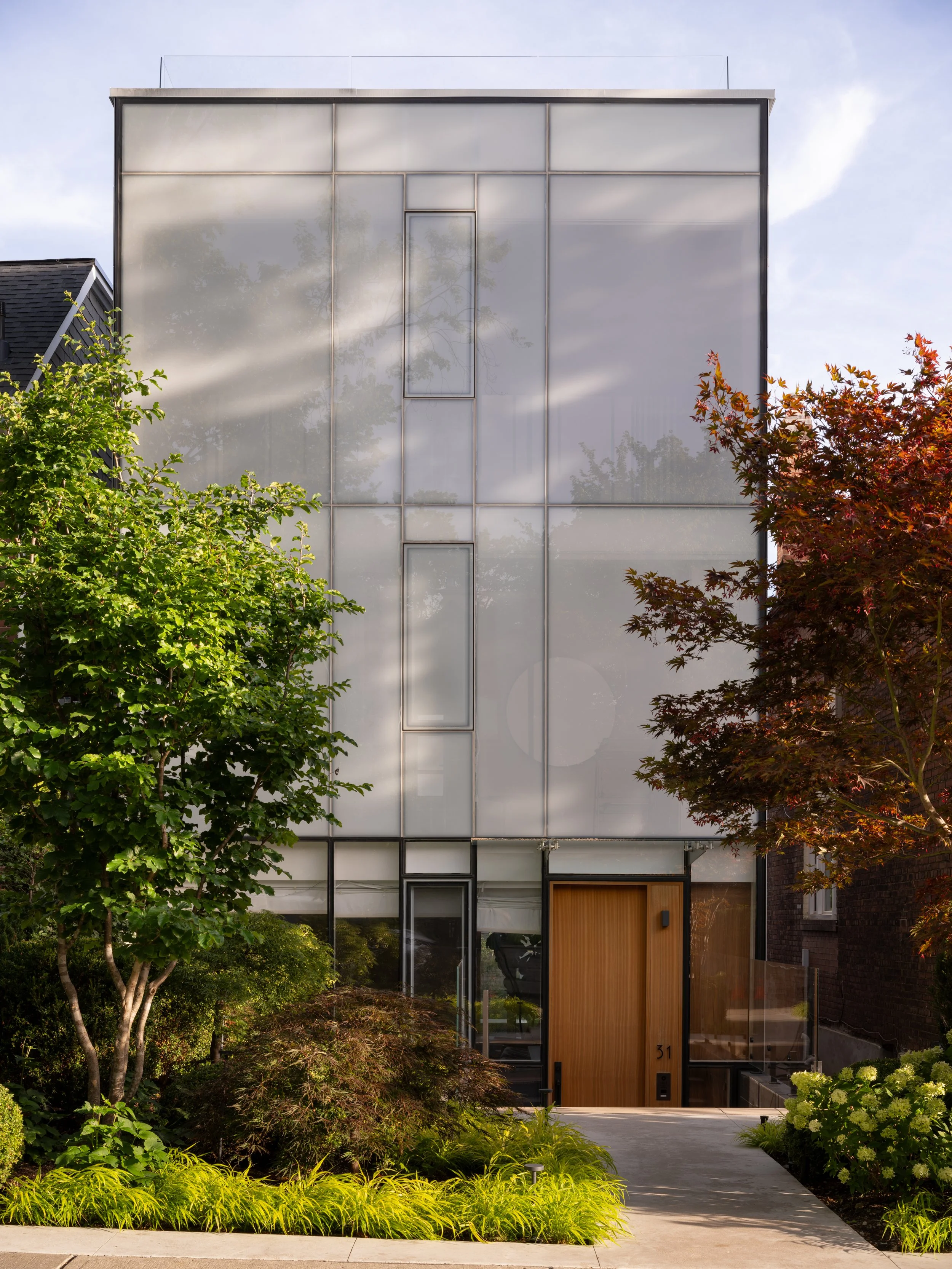
With a beautifully resolved interior and a thoughtfully designed private backyard complete, the final challenge was the front yard: how to frame the property in a way that tells its story before a visitor even reaches the door.
Rather than following a strictly formal approach, the design embraces a more naturalized front garden, creating a soft yet striking arrival sequence. A mature Japanese maple anchors the composition, supported by smaller and broader varieties that establish layered height and visual depth.
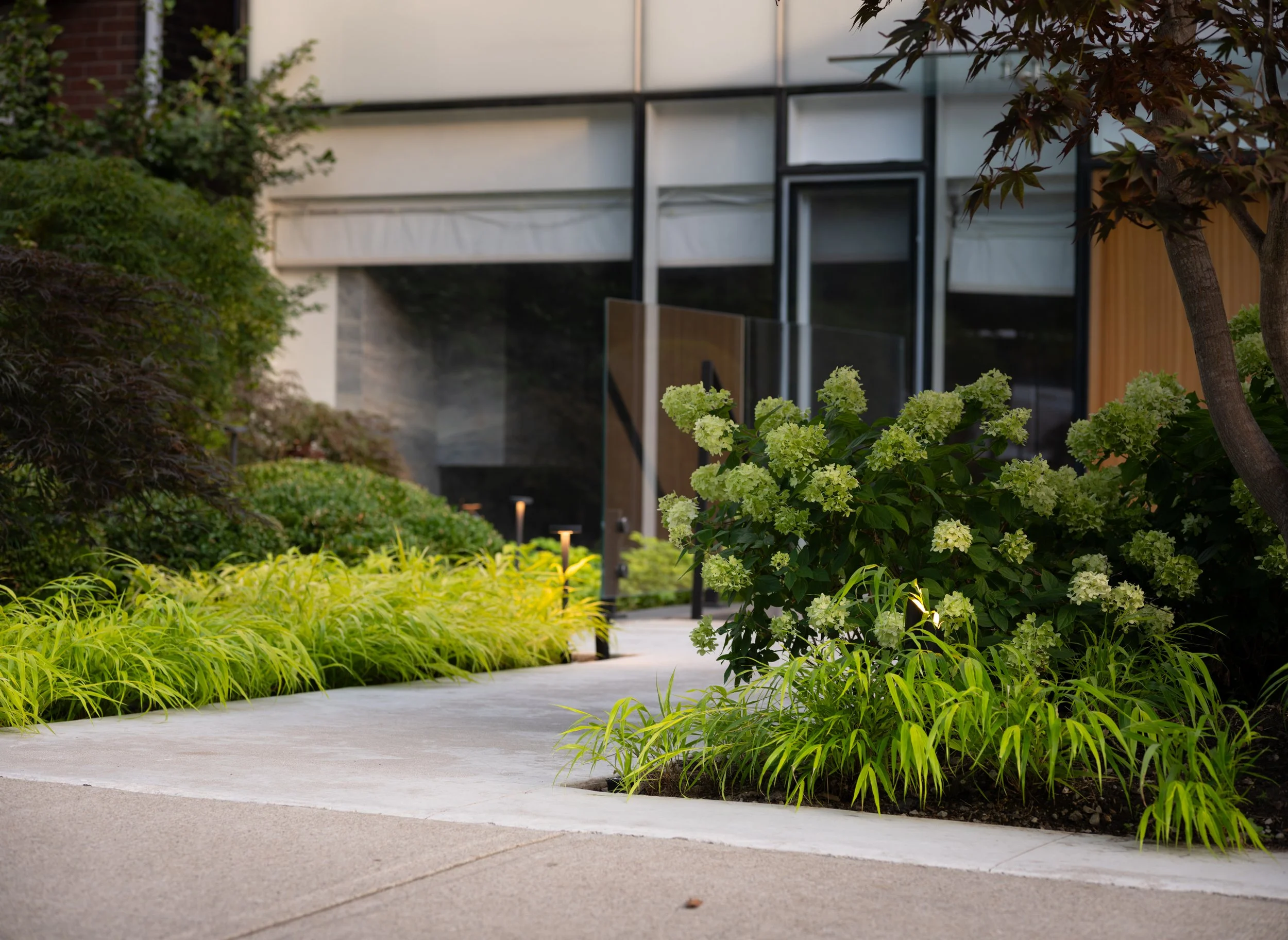
Forest grass was introduced along the edge of the pathway to gently soften transitions, paired with low, warm path lighting that guides movement through the space. A carefully curated mix of additional plantings reinforces the naturalistic character while maintaining enough structure to complement the home's contemporary architecture.
The result is a front landscape that feels both composed and effortless. It frames the residence without overpowering it, offering a quiet introduction that mirrors the calm and refined experience found throughout the rest of the property.
A Project Worth Remembering
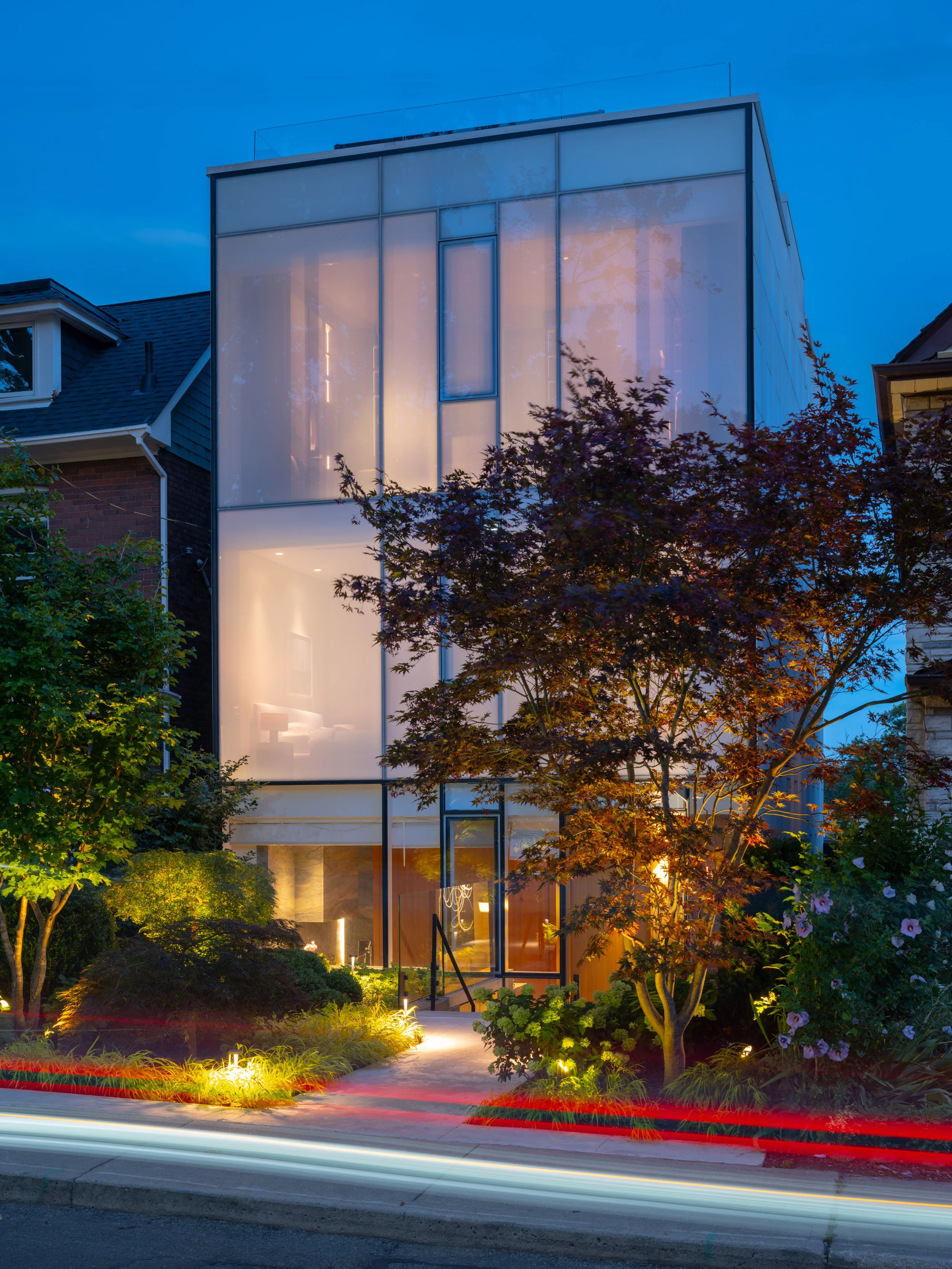
Withrow Serenity was awarded the Landscape Ontario Award of Excellence in Residential Construction ($250,000–$500,000) in 2026, a recognition that reflects the level of care, collaboration, and craftsmanship invested in the project from start to finish.
For our team, it is always meaningful to see a project resonate beyond the construction process and be acknowledged in this way. Withrow Serenity remains a source of pride within the studio, often revisited through our project imagery as a reminder of what thoughtful design and execution can achieve.
As we look ahead, we continue to find inspiration in the projects currently underway and those still to come, each offering a new opportunity to refine, challenge, and elevate our work.