How to Identify and Treat Boxwood Moth Damage in Toronto

Box Tree Moth Season Is Approaching in Toronto: What Homeowners Should Know

We are about one month away from the start of peak feeding season for the box tree moth, and if you are a homeowner in Toronto, especially in neighbourhoods like Etobicoke, Forest Hill, Rosedale, and Kleinberg, there is a good chance you have encountered these destructive caterpillars over the past few years.

Whether you are a new or existing client, Parkscape remains diligent in monitoring for early signs of infestation as temperatures begin to rise. Warmer weather signals the emergence of box tree moth populations that have overwintered and are now actively searching for their first food source of the season.

It is important for homeowners to understand what to look for, especially if your property features professionally landscaped front and backyard gardens. This is particularly true for landscapes containing shrubs from the Buxus family, more commonly known as boxwoods.

Many luxury homes incorporate English boxwoods and boxwood globes into their landscape design because of their clean structure, elegant appearance, and timeless curb appeal. While box tree moths can be highly destructive to these shrubs, Parkscape believes thoughtful landscape design should never be compromised because of pest concerns. Instead, we focus on educating homeowners, carefully monitoring properties, and providing professional boxwood moth treatments when necessary.

When it comes to identifying a potential or active infestation, these are the key warning signs we look for and what homeowners should watch for as well.

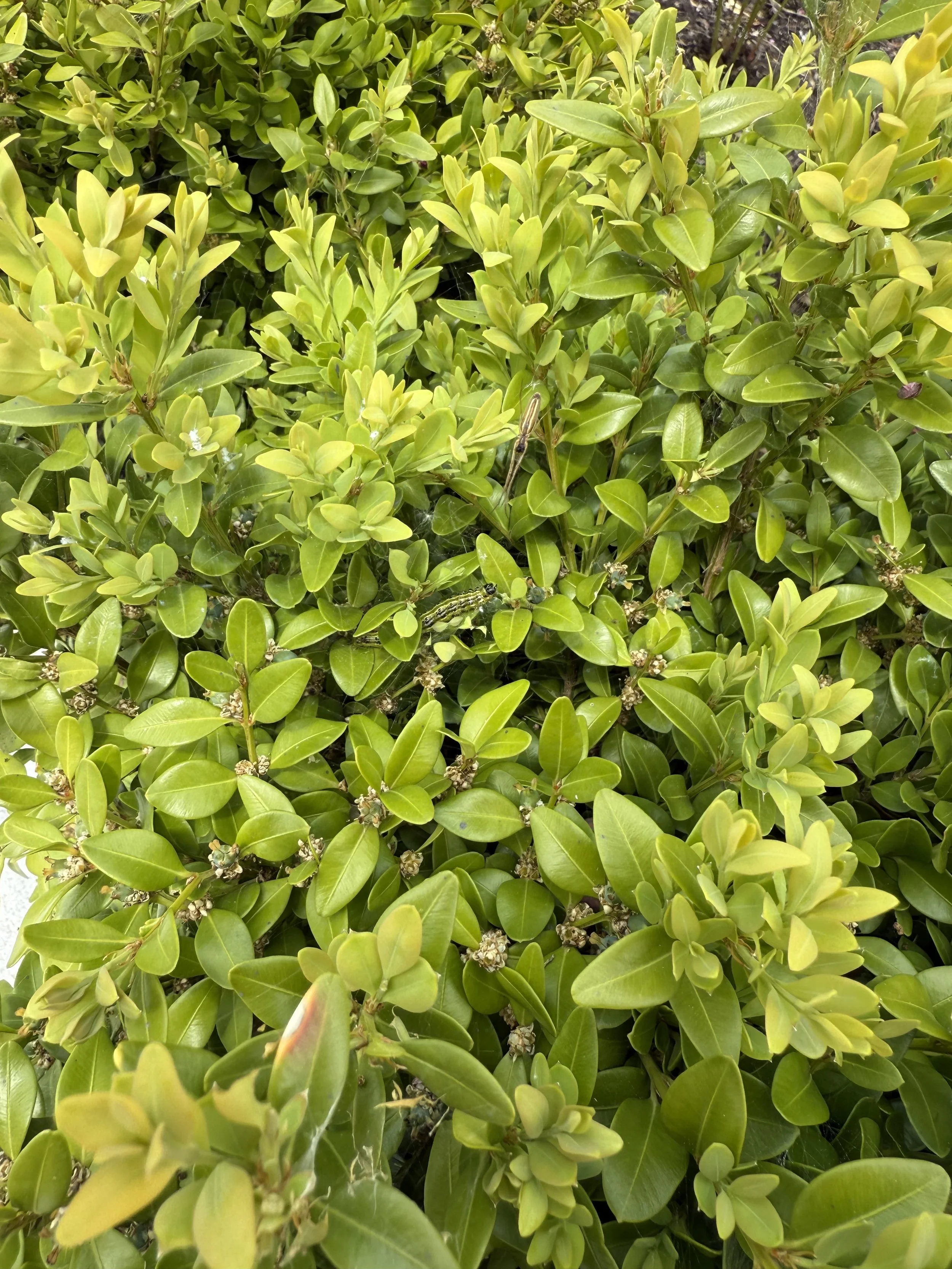
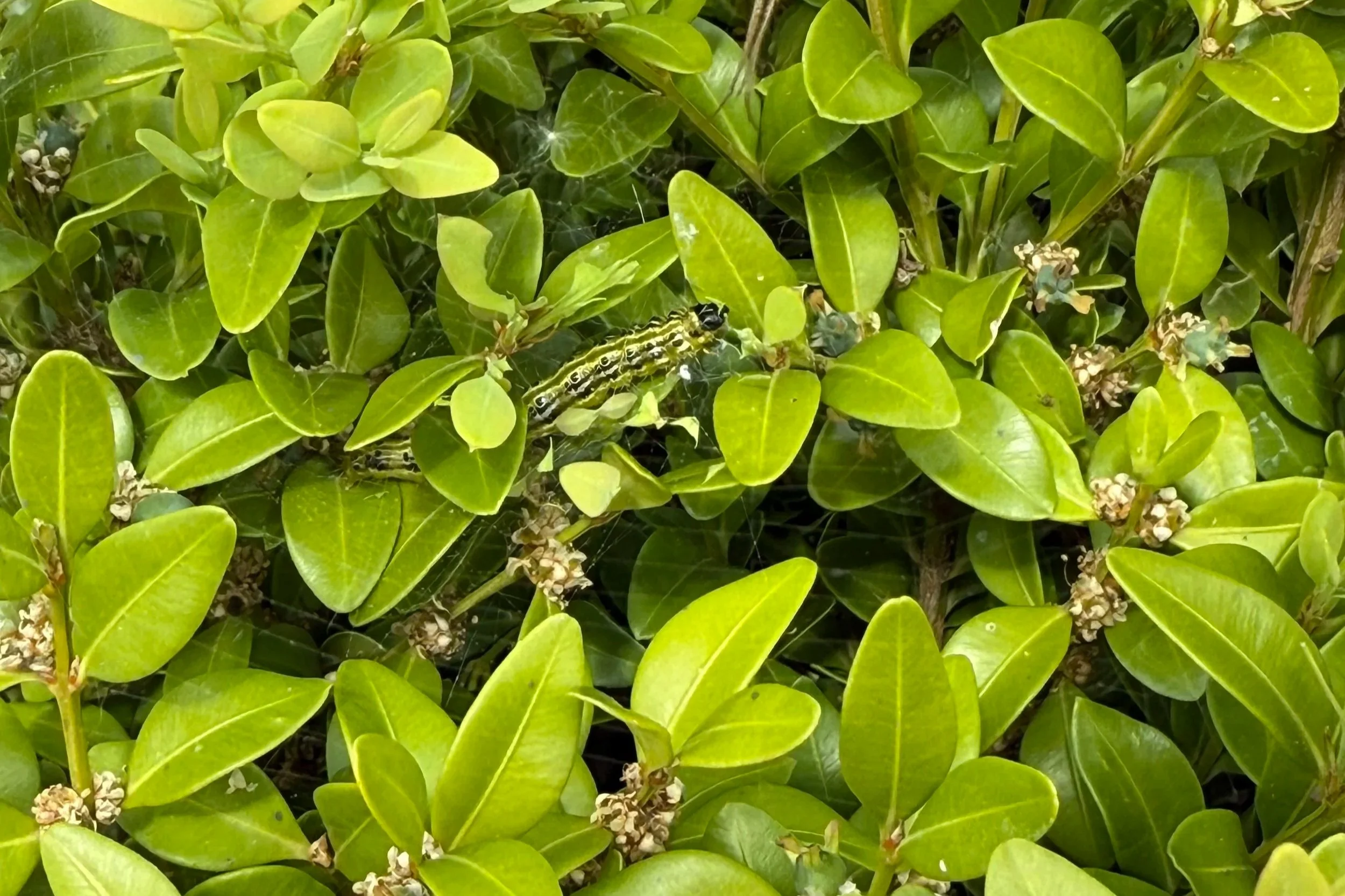
Mature boxwood moth caterpillar found on a client’s boxwood hedge


Tell Tale Signs of Boxwood Moth Activity In Your Gardens

Homeowners who catch a box tree moth infestation early have a much better chance of protecting and restoring their boxwoods before severe damage occurs. Here are the most common signs to watch for throughout the spring and summer months:

  • Browning or thinning boxwoods. In many cases, hedges begin to appear dry, scorched, or “burnt.”

  • Leaves with visible feeding damage, including partially eaten foliage and large crescent shaped holes.

  • Major sign: One of the most noticeable warning signs is webbing inside the shrub. The webbing often resembles fine silk threads and may contain cocoons, dried leaves, or debris. Be sure to gently separate the branches and inspect deep inside the shrub where caterpillars tend to hide. This webbing is distinct and not to be confused with the average and welcomed spider web.

  • Large green and yellow caterpillars with black stripes. Box tree moth caterpillars are primarily nocturnal, meaning they feed at night and remain hidden deep within the shrub during the daytime.

  • Caterpillar droppings beneath the shrub. Droppings may appear green or black. It is also important to note that box tree moth eggs darken as they mature and can sometimes fall to the ground if the shrub is disturbed or shaken.

  • Late Stage: In later stages of the infestation, you may notice white moths with brown borders on their wings resting on or around the shrubs.

Client example of severe damage, thinning, eaten leaves, and webbing from a boxwood moth infestation

Why Are Boxwood Moths So Prevalent In Higher Income Residential Areas In Toronto?

Because box tree moths rely almost exclusively on boxwood shrubs as their primary food source, neighbourhoods with a high concentration of boxwoods have become especially vulnerable to infestation. In many upscale areas of Toronto, including Etobicoke, Forest Hill, and Rosedale, mature boxwoods are a common feature in professionally designed landscapes.

It is not unusual to see rows of elegant hedging and large, established boxwood shrubs extending from one property to the next. While this creates a timeless and refined appearance, it also allows box tree moth populations to spread more easily between neighbouring homes. Once an infestation begins on a street, the moths can quickly move from garden to garden if left untreated.

Another major factor contributing to the growing issue is delayed or ineffective treatment. While there are many online recommendations for DIY boxwood moth control, many solutions are simply not thorough enough to manage infestations at the scale we commonly see in these neighbourhoods. In severe cases, waiting too long to intervene can lead to extensive defoliation and permanent damage to mature shrubs.

For many years, Parkscape has been actively identifying and treating box tree moth infestations throughout our clients’ properties across Toronto. Through firsthand experience, we have found that a small number of treatment methods are highly effective when applied properly and at the correct time of year. At the same time, there are many commonly suggested approaches that often waste valuable time while the infestation continues to spread.

The Best Treatments for Boxwood Infestation in Toronto

Best Treatments

Biological Treatment:
Biological treatments are typically our first line of defense against box tree moth infestations. Our preferred solution is a Bt-K concentrate, also known as Bacillus thuringiensis var. kurstaki. This treatment is highly effective against box tree moth caterpillars while remaining safe for surrounding plants, pets, and beneficial pollinators.

At Parkscape, protecting pollinators is especially important to us. In fact, Matt has maintained a private bee farm with 18 hives since 2019, which has helped shape our commitment to environmentally responsible garden care and treatment methods.

Our treatment process involves thoroughly soaking the affected shrubs until the foliage is fully coated with the solution. Applications are performed later in the day because box tree moth caterpillars are primarily nocturnal feeders. Evening applications also help prevent the sun from drying the treatment too quickly, which can reduce its effectiveness.

During the treatment phase, we also ensure that irrigation systems are temporarily turned off so the application is not diluted or washed away prematurely.

The following day, we return to inspect the shrubs and gently shake the branches to assess treatment effectiveness. In successful applications, affected caterpillars and eggs will often fall from the shrub quickly. From there, we clean the area thoroughly and determine whether any follow up treatments are required.

Treatments are typically doubled up, where our team will revisit the property in 7-10 days to repeat the treatment to fully terminate any remaining eggs.

Note: Over the years we’ve come to notice with experience that colder winters & springs in Toronto will bring two reproductive cycles for the boxwood moth, but warmer winters and springs bring three reproductive cycles, creating more difficult infestations.

Monitoring & Prevention:
he most effective way to protect boxwoods is to identify infestations as early as possible. That is why we prioritize routine inspections beginning in early spring and continuing throughout the growing season into fall.

For both current and returning clients, we follow a proactive seasonal approach that includes:

  1. Early spring monitoring and inspection

  2. Early Bt-K applications as soon as eggs or larvae are identified

  3. Scheduled follow up inspections throughout the season

  4. Ongoing monitoring of mature boxwoods and hedging for signs of recurring activity

Treatments To Leave On The Shelf

Chemical Insecticides:
For some homeowners, using aggressive chemical insecticides may seem like the fastest way to eliminate a box tree moth infestation. However, at Parkscape, we believe the long term consequences often outweigh the short term results.

Many conventional insecticides do not target box tree moths exclusively. They can also harm beneficial pollinators (And we always protect the bees!) and important insect species that healthy garden ecosystems rely on to thrive. In luxury residential landscapes, maintaining the balance of the surrounding ecosystem is just as important as protecting the plants themselves.

Harsh chemical treatments can also place unnecessary stress on surrounding plant material. In some cases, homeowners may later face additional costs associated with replacing plants that were negatively affected during treatment.

With proper monitoring, early detection, and professionally applied biological treatments, box tree moth infestations can often be managed effectively without introducing unnecessary risk to the rest of the garden.

Hand pruning and manual removal:
While cleanup is an important part of our treatment process, hand pruning and manual removal alone are generally not effective as a primary treatment strategy.

After treatment, we always ensure that affected debris, eggs, larvae, caterpillars, and moths are properly removed from the site. However, relying solely on hand removal can be extremely time consuming, especially on properties with extensive hedging or mature boxwoods.

Because box tree moth caterpillars hide deep within dense shrubs, there is a significant risk of missing active areas of infestation. Even with experienced landscapers, manual removal leaves considerable room for error. If eggs or caterpillars remain hidden within the shrub, the infestation can continue to mature and become far more difficult to control later in the season.

In many cases, delaying effective treatment while attempting manual removal can ultimately increase both the damage to the garden and the long term treatment costs for the homeowner.

Identified or Suspect Box Tree Moths in Your Garden? Here Are the Next Steps

Box tree moth infestations have become increasingly common throughout residential neighbourhoods across Toronto, particularly in areas with mature boxwood landscaping. The good news is that early identification and treatment can make a significant difference in protecting the health and appearance of your garden.

The best next step for concerned homeowners is to contact a trusted landscaping professional or maintenance team who can properly inspect the shrubs, identify the severity of the infestation, and recommend the most effective treatment plan. Acting early is important, as untreated infestations can spread quickly and cause severe damage to established boxwoods.

There’s a difference between a good maintenance team and a great one. At Parkscape, all of our landscapes complete identification & treatment training to ensure they can identify between the harmful insects from the beneficial ones. We’ve found that maintenance teams aren’t typically trained in identification, which we’ve seen lead to misdiagnoses that cause major damage as the season progresses. Make sure to ask for training credentials when dealing with a potential infestation.

If you have questions about box tree moths, boxwood treatments, or signs of infestation on your property, feel free to reach out to the Parkscape team. We are always happy to help guide homeowners toward the safest and most effective solution for their gardens.

Contact The Parkscape Team